
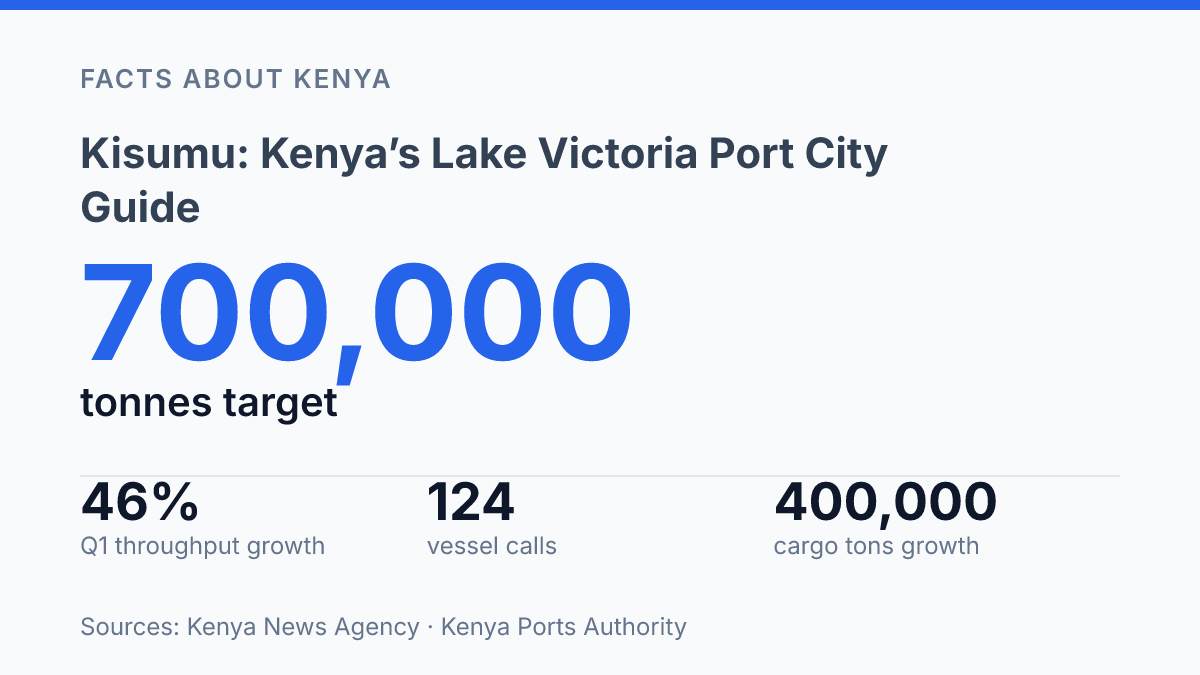
Kisumu is no quiet lake stop: its port handled more than 350,000 metric tons in 2025, up from 25,000 in 2018.
That jump changes how you should read the city. On Lake Victoria, the waterfront isn’t just a place for sunset photos. It is a working edge of ferries, fish cages, oil movement, and cross-border trade.
That creates a useful tension. You can spend the morning at Dunga Board Walk for about $1, then face a county economy where transport and storage make up 18.8% of output.
This guide follows that split personality: the port that explains the city’s weight, the lake stops that give it texture, the nearby wildlife that rewards patience. The museum clues that make Nyanza feel legible. In my honest opinion, treating it as a quick stop is the mistake.
Why Kisumu matters on Lake Victoria
The calm water makes the city look leisurely, but its port now handles cargo growth big enough to redraw western Kenya’s trade map. Kisumu is a port city on Lake Victoria in western Kenya, and it’s the most important city on the lake’s Kenyan shore. That status isn’t just civic pride. It shows up in how goods move, how people travel, and how daily life leans toward the water.
By 1960, the opening and expansion of rail-and-lake transport links had made the city a regional hub rather than a lakeside stopover. Trains connected the interior to the shore.
Lake vessels carried people and freight across Victoria’s wider network. The result was a city that looked west as much as it looked inland.
That old transport logic still matters. According to Kenya Ports Authority, the Port of Kisumu is the largest lake port in East Africa, with 4 berths, a 400-metre quay, a wagon-ferry linkspan. An oil jetty.
Cargo rose from 25,000 metric tons in 2018 to more than 350,000 metric tons in 2025. Those figures make the place feel less like a quiet waterfront city and more like a working hinge between Kenya, Uganda, Tanzania. The broader Lake Victoria basin.
The contrast matters. You can stand near the shore and feel a slow, open rhythm: fishing boats, lake air, people moving without hurry.
But behind that mood sits a hard economic fact. Ports create jobs, shape road traffic, pull in fuel and agricultural cargo, and give businesses a reason to cluster nearby.
In my view, the mistake is treating this city as only a pleasant lakeside base. Its relaxed surface is real, but so is its commercial weight.
The lake doesn’t just make the city scenic. It gives it purpose.
Best lakeside stops and viewpoints
The strongest lake views here don’t feel remote. They sit close enough to daily life that fishing boats, reeds, music, and evening crowds all share the same frame.
Dunga Hill Camp gets mentioned so often for a reason. It gives you a wide, open look across Lake Victoria without making the water feel staged or distant.
Dunga works best when you slow down. People come for the horizon. They stay because the shoreline keeps moving.
Boats nose in and out. Birds cut low over the water. The light changes fast, especially near dusk, when the lake turns from silver to deep blue in minutes.
A 2024 Green Finance Assessment factsheet gives the view more weight: about 21.4% of the county is covered by the lake. That number matters when you’re standing at the edge of Dunga.
This isn’t just a backdrop for photos. It’s part of the county’s food, work, weather, and identity.
Hippo Point offers a different kind of payoff. It’s the classic sunset stop, with a broad western-facing sweep that makes the end of the day feel bigger than the city around it. You don’t need a complicated plan here.
You need timing, clear skies. A little patience.
But the scenery isn’t the whole story. The same shoreline that gives visitors postcard views also shows how closely people live with the lake. You see recreation beside local livelihoods, calm water beside working boats, and beauty beside environmental pressure. In my honest opinion, that contrast is what makes these viewpoints feel honest rather than polished.
Together, Dunga Hill Camp and Hippo Point define the lakeside experience better than any checklist could. One gives you texture and activity.
The other gives you the clean drama of sunset. Both remind you that the city’s best views aren’t separate from local life… they’re woven directly into it.
Wildlife stops inside and outside the city
You can see impalas, zebras, cheetahs, baboons, and Kenya’s rare roan antelope from the city base without surrendering two days to the road. That’s the appeal here. The wildlife is close, practical, and easy to fit around a short stay.
But the tradeoff is scale. These are compact encounters, not the sweeping game circuits you’d plan around in the Mara or Tsavo.
Kisumu Impala Sanctuary is the easiest first stop. Kenya Wildlife Service places it about 3 km from the city, with citizen adult entry listed at KSh 215 and non-resident adult entry at US$22 in 2026.
The draw is exactly what the name promises: herds of impalas moving through a protected pocket of green. Zebras add a stronger safari feel, especially for visitors who don’t have time to travel far beyond town.
The sanctuary’s animal orphanage gives the visit a different tone. Cheetahs and baboons live here under care. The experience feels more contained than wild.
That can disappoint travelers expecting open-country drama. It also makes the stop useful for families, school groups, and first-time visitors who want to observe animals at close range without turning the day into a major expedition.
Ruma National Park asks for more effort. It changes the mood completely.
Southwest of the city, the park sits in a quieter part of western Kenya where tall cliffs frame open grassland and woodland. Nature Kenya identifies Ruma as a 120 sq km Key Biodiversity Area and Kenya’s last remaining sanctuary for the nationally endangered roan antelope. In my humble opinion, that single fact makes Ruma more than a casual add-on.
Birdlife is the other reason to go. Nature Kenya records more than 400 bird species in the park, which gives patient visitors a better reward than those racing through with a checklist. You still shouldn’t treat Ruma like a full national safari circuit.
Its strength is narrower and sharper: rare antelope, dramatic escarpment scenery. A sense of western Kenya’s wildlife away from the usual safari map.
What the museum says about Nyanza
The quietest stop in the city may explain more about its identity than the lakefront ever can. Kisumu Museum, opened in 1980, works best as a cultural anchor rather than a quick photo stop. It slows you down and asks you to look at the people behind the port, the markets. The shoreline.
Its collection places local life inside the wider frame of Nyanza Province. The artifacts point to how communities cooked, farmed, fished, dressed, healed, and marked status.
You don’t get one grand national story here. You get the texture of everyday regional life.
That narrower focus is the museum’s strength. Items such as household tools, ornaments, musical instruments, weapons, and farming implements show culture as something practical, not decorative. They make clear that heritage lived in hands, homes, fields, and ceremonies.
The grounds are quieter than the lakeshore viewpoints and the wildlife stops, but that’s exactly why they matter. A lake sunset gives you beauty. The museum gives that beauty a human backstory.
In my view, this is the stop that turns the city from a place you look at into a place you begin to understand. It reminds you that Nyanza’s history isn’t only held in archives or monuments. It’s carried in objects people used, repaired, passed down, and gave meaning to.
Plan around the water, not just the map
The smartest next step is practical: check the lake mood before you set your route. Port traffic, afternoon wind, sanctuary hours, and park roads can shape the day more than distance on a map.
The numbers point in one direction. If the port target of 700,000 tonnes in 2026 holds, the city will feel less like a stopover and more like a hinge between Kenya, Uganda, Tanzania, and Lake Victoria itself.
That growth brings a tradeoff. Better access can sharpen the visitor experience.
It can also flatten the places that still feel local. In my humble opinion, go slowly, pay attention, and let the lake set the pace. The best guide here is still the water.
Frequently Asked Questions
Q: What is Kisumu known for?
A: Kisumu is a Kenyan port city on Lake Victoria. That waterfront setting is the big draw. People come for lake views, easy access to nature. A slower pace than Kenya’s bigger cities. In my view, the lakeside feel is the main reason it stands out.
Q: What can you do at Dunga Hill Camp and Hippo Point?
A: Both spots are made for lake views, simple meals, and sunset watching. Dunga Hill Camp gives you a laid-back viewpoint, while Hippo Point is another strong place to look out over the water. They sound similar. The mood changes with the light… and that’s what makes them worth stopping for.
Q: Is the Kisumu Impala Sanctuary good for wildlife viewing?
A: Yes, especially if you want an easy wildlife stop close to the city. The sanctuary shelters herds of impalas and zebras, and its animal orphanage has animals like cheetahs and baboons. It’s not a full safari replacement. It gives you real wildlife without a long drive.
Q: What does the Kisumu Museum focus on?
A: The Kisumu Museum displays artifacts tied to the people of Nyanza Province. That makes it the best place to understand the region’s history before you head out to the lake or nearby parks. The collection is local, not generic, and that’s exactly why it matters.
Q: Is Ruma National Park worth a day trip from Kisumu?
A: Yes, if you want bigger scenery and more birdlife. Ruma National Park lies southwest of the city and is known for tall cliffs, roan antelope, and strong birdwatching. It takes more effort than staying in town. The payoff is real.