
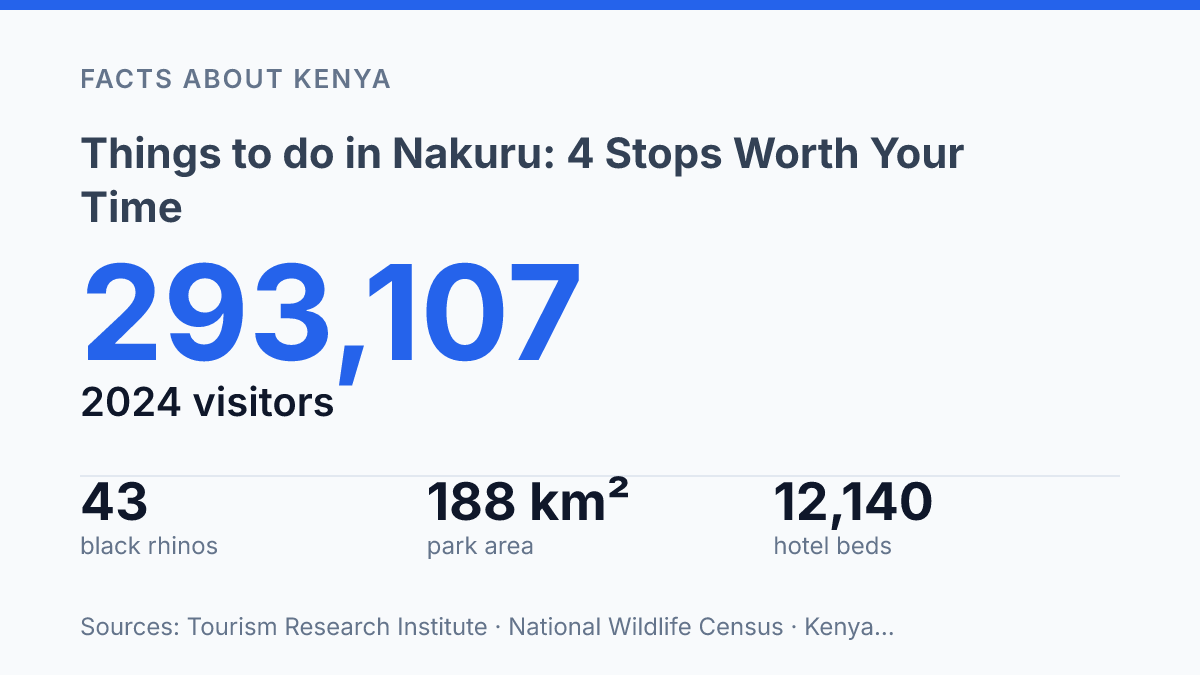
Things to do in Nakuru get real fast when you learn Lake Nakuru National Park drew 293,107 visitors in 2024. You can still cover its best hits in one hard-working day.
That demand makes sense. The park is only 188 km².
The 2024 wildlife count recorded 43 black rhinos, 16 white rhinos, and 3,323 buffalo. This is not a vague “maybe you’ll see something” stop.
The trick is choosing the right four moves, not trying to fill every hour. You’ll weigh a big game drive against crater-rim views at Menengai, quick food stops near the city, and timing choices that matter more than most visitors expect. In my honest opinion, the smartest Nakuru day is compact, not crowded.
Lake Nakuru National Park and the Big Game Drive
Nakuru’s main safari park pulled 293,107 visitors in 2024, according to the Tourism Research Institute. That number tells you exactly why it belongs first on the day’s plan.
Lake Nakuru National Park was gazetted in 1961, but its value now is practical rather than nostalgic. It gives visitors a protected Rift Valley safari experience within easy reach of Nakuru city. That makes it the smartest first stop if you want wildlife before lunch, not a long transfer before anything happens.
The headline draw is big game in a compact setting. Expect the park to be known for rhinos, lions, buffalo, and rich birdlife rather than endless empty driving. In my view, that compactness is the real advantage here: you can get a proper safari feel without losing half your day to distance.
Still, the obvious stop isn’t always the easiest one to time well. Water levels can shift where birds gather, and animal movement changes fast after the morning cool fades. Go early if wildlife is the priority.
A late start can still work. It asks more patience from you.
Entry planning is straightforward, as long as you check the latest Kenya Wildlife Service pricing before travel. Recent published fees for adult access to Lake Nakuru list separate rates for East African citizens, residents, African citizens, and non-residents. The structure has included KSh 1,500 for East African citizens, KSh 2,025 for residents, US$50 for African citizens, and US$90 for non-residents.
Don’t treat those numbers as permanent. KWS fees can change by notice, and rates may differ by season, age category, vehicle, or residency proof. Carry the right ID or passport, confirm the current tariff before you go, and build the park visit around the first clear window of the day.
Viewpoints, Crater Rims, and Photo Stops
The quickest way to make Nakuru feel enormous is to leave the low roads and look down from the rim. Baboon Cliff is the classic stop for that first wide view over Lake Nakuru, the park floor. The escarpment beyond. You don’t need a long walk here.
You need clear air, a steady camera. A few quiet minutes before the next vehicle arrives.
Menengai Crater gives you a different kind of scale. Its depth of roughly 490 metres turns the view into layers: rim, shadow, floor, distant farms, and sky.
That depth matters for wide-angle scenic photography. It creates foreground and background without forcing you to hunt for a perfect subject.
The crater rim also works well for short hikes. Smithsonian Institution volcano data, accessed in 2026, places Menengai at 2,278 metres above sea level, with a broad caldera measuring about 8 by 12 kilometres. That size makes even a brief stop feel rewarding.
But don’t treat it like a polished city lookout. Tracks and access roads can shift from easy to rough after rain.
That’s the tradeoff with Nakuru’s best elevated views. Many sit outside the main park gate.
You gain bigger scenery and fewer tight viewing windows. You also give up the dense animal presence and smoother visitor setup found inside the protected area. In my honest opinion, that trade is worth it if your camera roll needs space, not just close-ups.
If you’re moving between Nakuru and nearby towns, Lake Elementaita and the Great Rift Valley viewpoints make simple add-ons. They’re best treated as short pauses, not full detours. Stop, frame the valley, check the light, then keep moving.
Food Stops, Local Markets, and a Quick City Break
Kenya’s fourth-largest urban center can save your safari day with cheaper lunch, fuel. A bed you didn’t book weeks ahead. Nakuru is known for nature.
The town itself is what keeps a one-day or overnight trip practical. Treat it as part of the route, not a pause button.
That practicality shows up fastest around the Nakuru Central Business District. You’ll find simple Kenyan eateries serving rice dishes, stews, chapati, beans, tea, and quick plates that cost far less than hotel dining. Nyama choma spots also fit the mood after a dusty drive, especially if you’re traveling with a group and want a slow meal rather than another packed snack.
For budget travelers, the best stop may be fruit, not a full lunch. Bananas, mangoes, roasted maize, mandazi, and market snacks can carry you through the afternoon without forcing a long sit-down meal. In my humble opinion, that kind of small stop tells you more about Nakuru than another generic hotel buffet ever will.
Markets give the city break some shape. Wakulima Market functions as a wholesale hub for Nakuru, Nyandarua, Laikipia, Baringo, and Narok counties, according to the County Government of Nakuru City IDeP 2024–2028. The same plan says existing city market sites cover less than 40 acres despite demand from a population of more than 392,000, so expect movement, bargaining, noise, and tight space.
The tradeoff is comfort. Town stops can be busy, parking can be annoying, and open-air market areas don’t offer the polished feel of a lodge. But when you need fresh food, airtime, supplies, an ATM, fuel, or a cheaper overnight base, the city solves problems that scenery can’t.
If you’re staying over, Nakuru also has enough accommodation depth to make flexible planning realistic. The Tourism Research Institute reported 12,140 hotel beds in Nakuru County in 2024, equal to 9.0% of Kenya’s licensed hotel bed capacity. That means you don’t have to build the whole trip around a single lodge if your schedule shifts.
Best Time to Go and How to Plan One Full Day
The easiest Nakuru day is won before 9 a.m.. Lose the morning on the highway and the whole route starts borrowing time from itself. From Nairobi, plan on about 2.5 to 3 hours to reach Nakuru, depending on traffic, police checks, weather, and how early you leave.
A 5:30 a.m. departure sounds harsh. It protects the best hours of the day.
For weather, January to March gives you the cleanest planning window. July to October is also a strong bet for drier roads and easier movement inside the park. Rain doesn’t ruin Nakuru.
It slows everything down. Muddy sections, clouded viewpoints, and longer town traffic can turn a neat plan into a squeezed one.
Build the day around three anchors, not six. Start with Lake Nakuru National Park in the morning, when you have cooler air and enough time to move without watching the clock. Leave the park late morning or around midday, then make Baboon Cliff your short scenic pause before heading into town for a late lunch.
That route works because it respects distance. It also leaves room for the small delays that always happen: a slow gate process, a longer-than-planned sighting, a photo stop that earns five extra minutes. In my view, the best Nakuru itinerary is the one that leaves breathing space, not the one that proves how much you can cram into a day.
If you’re returning to Nairobi the same evening, aim to start the drive back by mid-afternoon. This keeps you ahead of fatigue and gives you a buffer before darkness. Stay overnight only if you want a slower second morning, not because the one-day plan failed.
The tradeoff is simple. The most efficient day is not the most ambitious one. Add too many stops and you lose the quiet gaps between them… and those gaps are where Nakuru starts to feel like more than a checklist.
Why Your Nakuru Day Should Leave Room for the Unexpected
Build your day around margins, not wish lists.
Lake Nakuru rewards early entry. The lake itself has changed. KWS says its surface area is up by an estimated 70% against the 1984–2009 average, so flamingos don’t obey old postcard logic.
Plan for rhinos, viewpoints, and weather. Treat birds as a bonus.
If you’re leaving Nairobi, confirm park fees from the 2025 notice before you go, then keep the afternoon flexible for Menengai Crater or a city meal. In my humble opinion, the best trip here feels controlled without feeling over-planned. Nakuru punishes the visitor who chases everything. It rewards the one who knows when to stop.
Frequently Asked Questions
Q: What are the best things to do in Nakuru for a first-time visitor?
A: Start with Lake Nakuru National Park, then add a viewpoint or two if you want a wider look at the area. In my view, that mix gives you the best balance of wildlife, scenery, and easy planning. If you only have one day, this is the cleanest way to spend it.
Q: How many days do you need to explore Nakuru properly?
A: Two days is enough for the main sights without rushing. One day works if you keep it tight, but you’ll miss the slower stops that make the trip feel complete. The tradeoff is simple: short trip, fewer detours. Longer trip, better pacing.
Q: Is Nakuru worth visiting if I only have a weekend?
A: Yes, a weekend is enough to make the trip pay off. You can fit in the core attractions and still have time to eat, rest, and move around without feeling crammed. That matters more than trying to see everything.
Q: What should I pack for a day out in Nakuru?
A: Bring comfortable shoes, sun protection, water. A light layer for changing weather. If you’re heading to outdoor spots, a camera or phone with space for photos helps too. The weather can shift fast, so being prepared saves you a headache.
Q: Are there family-friendly places to visit in Nakuru?
A: Yes, several stops work well for families because they don’t require a hard schedule or intense walking. The best picks are the ones with easy access, short visit times, and enough variety to keep kids interested. In my honest opinion, that’s the real win for family travel: less fuss, more time actually enjoying the day.