
Things to do in Mombasa get easier to choose when you know one odd fact: visits to selected Kenyan heritage and wildlife sites peaked at 263.8 thousand in July 2025, even as the annual total slipped.
That contrast matters. The city can feel crowded in one pocket and strangely calm in another, especially now that coastal bed-nights rose in 2025 while parts of the North Coast and Mombasa Island fell sharply.
Start with Fort Jesus, built in 1593–1596, then let the old streets, beaches, marine trips, family stops, and after-dark food plans fall into place. This guide keeps the route tight, practical, and honest about timing. In my honest opinion, Mombasa rewards travellers who stop treating it like a beach break with side attractions. The better version is the other way around: history first, saltwater next, then the city after sunset.
Fort Jesus and the Old Town streets
The strangest thing about Fort Jesus is that its best view isn’t of the sea, but of Mombasa’s habit of absorbing every power that tried to control it. The fort was built under King Philip I of Portugal to guard the old port.
That original purpose still shapes the place. Its walls point to surveillance, trade, fear, and profit all at once.
This is not a ruin you visit only for cannon angles and stone corridors. The fort feels like a symbol of conquest. It now works better as a place to read the city’s layered identity than as a military monument. In my view, that shift is what makes it the strongest first stop in Mombasa.
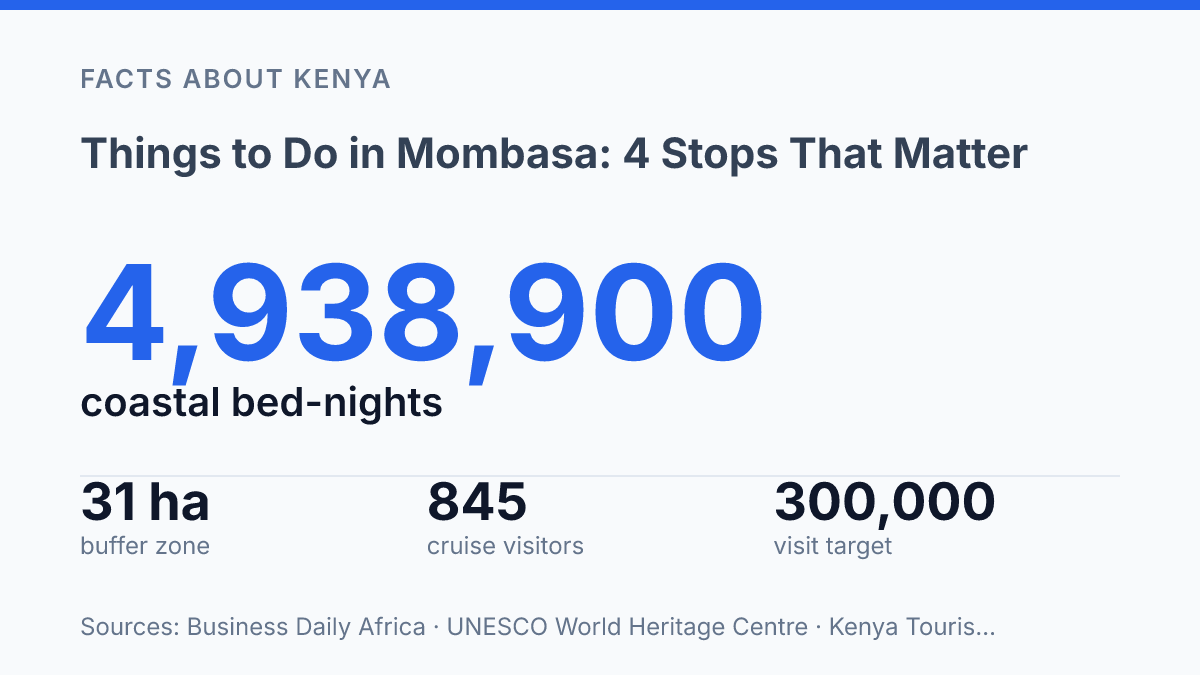
According to the UNESCO World Heritage Centre, the World Heritage property covers 2.36 hectares, Old Town forms a 31-hectare buffer zone. The fort was built in 1593–1596 before entering the list in 2011.
You may still see 1985 attached to the site in older or confused travel notes, but UNESCO’s listing gives the later inscription date. That distinction matters if you care about accuracy, not just photo stops.
Step outside the fort and the streets change the story. Old Town’s carved wooden doors, shaded balconies, coral-stone walls, and tight Omani-era street plan make the city feel lived-in rather than preserved behind glass.
The best walk here is slow. Look up often, then look back at how narrow lanes frame the fort.
Practical timing matters more than most visitors expect. National Museums of Kenya lists Fort Jesus as open daily from 8:30 a.m. to 5:30 p.m., with 2026 adult admission set at KSh 550 for Kenya and East African citizens, US$9 for residents and rest-of-Africa visitors, and US$17 for non-African foreigners. Go early if you want the stone passages before the group tours arrive.
You don’t need a full colonial history lecture to feel the weight of the place. Pair the museum rooms with a short Old Town walk. The stop becomes sharper.
The fort explains who tried to control Mombasa. The streets show why the city was never only theirs.
Beach time on the north coast
The beach that looks best from the road can be the hardest one to enjoy once tides, vendors, and hotel frontage get involved. Nyali Beach is the simplest choice if you’re staying in or near Mombasa town. It sits closest to the city, so taxi time stays short. The water is usually more practical for a quick swim than for a full-day escape.
Bamburi Beach gives you more of the classic resort-strip feel. It has a higher concentration of hotels, beach operators, camel rides, and boat-trip sellers, so it’s useful if you want everything within reach.
The tradeoff is obvious: you get convenience. You don’t get much quiet.
Shanzu Beach sits farther north and feels more relaxed once you reach the better stretches. Resorts are still part of the scene. The spacing can feel less compressed than Bamburi.
Swimming can be less predictable, though. Currents and reef conditions change with the tide, so don’t judge safety by how calm the water looks from your lounger.
For a daytime plan with more than sunbathing, Bamburi has the strongest advantage. It puts you close to Mombasa Marine National Park, where glass-bottom boats and snorkelling trips run from the coast. Kenya’s 2025 conservation fee schedule lists Mombasa marine protected areas at KSh 500 for East African citizen adults and US$25 for non-residents, according to Kenya Law Legal Notice No. 160.
There’s a useful market clue here too. Business Daily Africa reported that North Coast bed-nights fell 55.1% in 2025, even as wider coastal demand rose.
That doesn’t mean the beaches are empty. It does mean some stretches may feel less packed than their reputation suggests, especially outside school holidays and long weekends.
Pick Nyali for speed, Bamburi for services, and Shanzu for a slower beach day. In my honest opinion, Bamburi is the best all-round choice for first-time visitors, but Shanzu is the one I’d choose when the plan is to do less, not more.
Wildlife and family stops near the city
Mombasa’s most useful family stop was carved out of a dead limestone quarry. Haller Park turned an industrial scar into an urban green space. That backstory gives it more weight than a simple animal stop.
You’re not just filling an afternoon. You’re walking through a rehabilitation project that now holds shaded paths, ponds, and wildlife close enough for children to stay engaged.
The park works best when you want nature without a long transfer. Giraffes, crocodiles, hippos, giant tortoises, and birdlife make it feel partly like a zoo-style visit.
The trails soften that feeling. It’s contained, easy to navigate, and forgiving if someone gets tired.
Prices also make it easier to plan. Revised fees took effect on 3 April 2025, with East African resident adults charged KSh 800 and children KSh 400, according to the Bamburi Haller Park Price List. Non-East African visitors pay more, so check the category before you arrive rather than at the gate.
Mombasa Marine National Park asks for a different mood. Snorkelling and boat trips put the focus on coral reefs, reef fish. The colour beneath the water rather than animals behind barriers.
It can be the richer memory, especially for confident swimmers. It also depends on tide, weather, visibility, and how patient your group is with boats.
That’s the tradeoff. The easiest day out isn’t always the one you remember most. The biggest-ticket plan can drain energy fast. In my humble opinion, for families staying more than a weekend, Haller Park is the smarter reset day: less rushing, more shade, and enough wildlife to keep the day from feeling like a compromise.
Food and evening plans after sunset
The smartest Mombasa evening is usually the one that leaves room for a second plate, not a second venue. Start with Swahili staples that travel badly and taste best near the coast: biryani with spiced rice and meat, pilau with a deeper clove-and-cardamom pull, fresh seafood, and viazi karai with chutney on the side.
None of this needs a formal restaurant crawl. Pick one good place and settle in.
Mama Ngina Waterfront works well when you want air, space. An easy after-dinner walk.
Open Budget Kenya’s 2025 tourism budget line targets 300,000 visitors for the waterfront, which tells you something useful: this is no longer just a casual viewpoint. It’s being treated as a proper public evening stop.
The tradeoff is pace. Mombasa’s evenings are better for atmosphere than for non-stop action, and that’s exactly why they work… the city rewards slower plans more than rushed ones. A sunset walk near the waterfront or the Old Town seafront suits couples, families, and anyone who wants conversation without shouting over speakers.
Nyali fits a different mood after dark. You’ll find more polished dining rooms, lounges, and louder late-night spots there. That doesn’t mean you need to chase the biggest crowd.
If you want music and a later finish, go north. If you want salt air, street snacks. A softer landing after a full day, stay closer to the island.
In my view, the best evening plan in Mombasa is simple: eat well, walk slowly, then decide whether the night needs one more drink or just a ride back.
What to book before the tide and crowds decide for you
Book the fixed pieces first, then let the coast stay loose. Fort hours, marine fees, Haller Park prices, tide times, and sunset all shape the day more than most first-time visitors expect.
The next few years will make that planning matter even more. Mama Ngina Waterfront is being treated as a serious visitor stop, with a target of 350,000 visitors in 2026, not just a place to drift past after dinner.
That’s the real lesson here. Mombasa isn’t hard to enjoy, but it’s easy to misread. In my humble opinion, the best trip won’t be the longest checklist. It’ll be the one where you arrive before the crowd, leave before the heat wins, and save enough appetite for the city after dark.
Frequently Asked Questions
Q: What are the best things to do in Mombasa for a first-time visitor?
A: Start with the old town, the beach, Fort Jesus. A dhow trip if you have time. Those four stops give you history, coastline, and local atmosphere without wasting a day. In my view, that’s the cleanest way to see the city fast.
Q: Is Mombasa good for both beaches and sightseeing?
A: Yes. That mix is the point. You can spend the morning at the coast and still fit in a historic stop later the same day. The surprise is how close everything can feel once you plan it well.
Q: How many days do you need in Mombasa?
A: Two full days works for a solid first trip, but three gives you breathing room. That extra day matters if you want slower beach time or a proper look at the old city. Rush it. You end up seeing less than you expected.
Q: What should I not miss in Mombasa?
A: Fort Jesus should be near the top of the list, along with a walk through the old town. Those are the stops that give the city real shape. The beaches are easier to find… the history takes a little more intention.
Q: Can I see the main sights in Mombasa without a tour?
A: Yes, you can handle a lot on your own if you’re comfortable planning transport. A guide can still help with context, especially in the old town and at Fort Jesus. That tradeoff is simple: more freedom on your own, more depth with a local expert.