
Things to do in Kisumu get serious fast: 5 km from the CBD, Dunga Beach shifts from working fish-landing site to lakefront lunch stop, with Lake Victoria stretching across Kenya, Uganda, and Tanzania.
That contrast is the city’s advantage. Fishermen trade tilapia at sunrise. By 9 am, birders at Dunga Boardwalk can log up to 60 species.
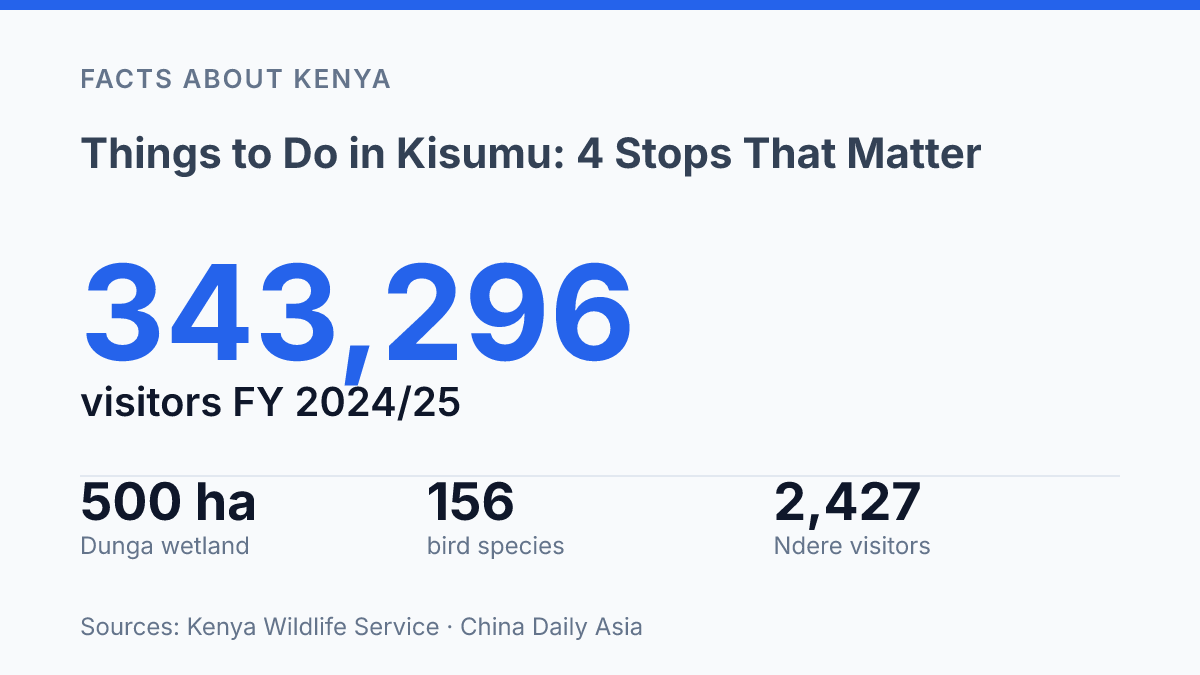
The nearby sanctuary drew 343,296 visitors in FY 2024/2025, more than Lake Nakuru on the same KWS chart. In my honest opinion, that gap should change how people talk about western Kenya. The stops ahead focus on easy nature, culture, markets, and day trips that make sense without turning one city break into a race.
Visit Dunga Beach and Lake Victoria
Fish comes off the boats here before most visitors have even chosen where to stand for their sunset photo. A 2026 report by China Daily Asia identifies Dunga Beach as a fish-landing site 5 km from Kisumu’s CBD, on Lake Victoria, a lake of roughly 68,800 sq km shared by Kenya, Uganda, and Tanzania.
That short distance matters. You can reach the lakefront without turning it into a full-day outing.
The mistake is treating Dunga like a quiet postcard. It looks calm from a distance.
The shore is full of boat crews, fish traders, motorbikes, voices, nets, and timing. That movement isn’t a flaw. In my view, it’s the main reason this stop feels more honest than a polished viewpoint.
Go early if you want the working beach at its most active. Go late if you care more about low light on the water.
Either way, keep your camera respectful. People are working here, not performing for visitors.
The wetland edge gives Dunga a second life beyond the boats. The Dunga Swamp and its papyrus channels draw serious birders, not just casual walkers with binoculars.
The same 2026 reporting notes a 500-hectare papyrus ecosystem with 156 recorded bird species, and birders can log up to 60 species between 6 am and 9 am at the Dunga Boardwalk. That’s a strong morning by any standard.
Hippo Point fits naturally into the same lakefront route. It’s nearby, easy to pair with Dunga, and better suited to wide lake views than close-up fishing activity. The name can raise expectations, but don’t plan around guaranteed hippo sightings.
Plan around the sky, the open water. The slow shift from heat to evening.
This is where Kisumu separates itself from Kenya’s inland city stops. The lake doesn’t sit at the edge of the experience.
It shapes the sound, work, birds, light, and pace of the place. Give it time, and don’t rush straight back to town after one photo.
See the Kisumu Impala Sanctuary
A fenced wildlife stop inside the city pulled 343,296 visitors in FY 2024/2025, according to Kenya Wildlife Service Wild Magazine, 2025. That tells you something useful: this isn’t a hidden side note. It’s one of Kisumu’s easiest nature stops when you don’t have a full day to spend outside town.
The draw at Kisumu Impala Sanctuary is simple and practical. You can see impala, hippos, zebras, and giraffes in a managed space close to the city center, without building your whole day around transport.
For travelers with children, that matters. Shorter walks, clearer boundaries, and predictable access make the visit easier to handle.
That convenience comes with a tradeoff. The sanctuary is small enough to fit into a city schedule. That also means you’re paying for access and location more than scale. In my honest opinion, that tradeoff is fair if you treat it as a compact wildlife stop, not as a grand wilderness experience.
Its position near Kisumu’s lakefront is the real planning advantage. You can pair it with a lakeside meal, a short walk, or another nearby stop without losing half the day in transit. If you’re in Kisumu for one night, this is the kind of place that saves your itinerary from becoming rushed.
Budget is also straightforward. Kenya Wildlife Service and eCitizen list entry at KES 300 for East African citizen adults, KES 200 for citizen children, USD 25 for non-resident adults, and free entry for children under 6, as accessed in 2026. That makes it especially useful for families who want a controlled outing with clear costs before they arrive.
Go when the heat is lower if you can. The animals are easier to watch, kids last longer. You won’t feel pressed to rush through the paths.
Keep expectations sharp. This stop works exactly as it should.
Tour cultural sites and markets
Kibuye Market tells you more about Kisumu in 20 noisy minutes than many polished attractions manage in an hour. It ranks among the largest open-air markets in western Kenya, but don’t treat it as a place to tick off souvenirs. Come for the movement: traders calling prices, handcarts squeezing through narrow gaps, piles of produce, second-hand clothes, household goods, and food stalls feeding people who aren’t here for a tourist performance.
Start with Kisumu Museum if you want the frame before the noise. Its Luo cultural exhibits help explain local architecture, domestic life, tools, ornaments, and community traditions without turning culture into a vague slogan. Visits fell to 114,400 in 2025, down from 157,100 in 2024, according to The Star’s report on the KNBS Economic Survey.
That drop doesn’t make the museum less useful. It may even make the stop quieter than you expect.
The museum gives you context. The market gives you the real pulse of the city… and the market is far less tidy.
That’s the tradeoff. Kibuye can feel chaotic, crowded, and blunt, especially if you arrive expecting a curated craft market. In my humble opinion, that roughness is exactly why it matters.
A third stop shifts the tone completely. The Jaramogi Oginga Odinga Mausoleum is one of the county’s major civic and political sites, best approached as a place of public memory rather than a quick photo stop.
You don’t need a full political biography to understand its role. The site anchors Kisumu within Kenya’s national story and gives visitors a clearer sense of why public life here carries such strong historical weight.
Link the three places in that order if you can. Museum first, market second, mausoleum last.
You’ll move from explanation to lived city life, then into civic memory. The route will feel less like sightseeing and more like reading Kisumu through its own institutions.
Plan easy day trips from the city
A trip can look 40 minutes away on the map and still swallow half your day if you choose the wrong road, boat connection, or market-hour departure. That’s why the best day trips from Kisumu aren’t just the famous ones. They’re the ones close enough to enjoy without turning your base in the city into a bus station.
Kit-Mikayi is the standout choice if you want one trip that feels distinct from the lakefront and city stops. The huge rock formation sits near Kisumu and carries deep cultural meaning, especially in Luo tradition. In my view, this is the day trip that gives the most return for the least travel stress.
County planners seem to see that value too. The County Government of Kisumu Annual Development Plan for FY 2024/2025 set aside KES 2 million for branding and marketing Kit Mikayi, which tells you the site isn’t being treated as an afterthought. Go early, take water, and give yourself time to listen if a local guide is available.
Ndere Island National Park asks for more effort. It rewards travelers who want quiet.
You reach it by boat, then spend the visit walking, watching wildlife, and taking in broad lake views from a place that feels far less crowded than Kisumu’s easier stops. According to Kenya Wildlife Service Wild Magazine, Ndere Island recorded just 2,427 visitors in FY 2024/2025, so solitude is part of the appeal.
That peace has a cost. Boat timing, weather, and transfers can stretch the day fast, so don’t plan Ndere as casually as Kit-Mikayi. It works best when you start early and keep the rest of the day loose.
Maseno is the easiest add-on for travelers who want a small detour rather than a full excursion. Its equator tourism centre also received KES 2 million in the same county plan.
It fits neatly into a light half-day route. Kakamega is a stronger choice if you want forest and a bigger change of scenery, but treat it as the longest option here, not a quick side stop.
Why the best Kisumu plan leaves room for the lake
Build your day around timing, not distance. Dunga is close, but its best hours come early. Markets hit harder when you’re not rushing through them with a driver waiting outside.
The next opening sits in the quieter places. Ndere Island recorded only 2,427 visitors in FY 2024/2025, next to 343,296 at the city sanctuary. That is not a weakness. It is space.
In my humble opinion, the smart traveller should treat Kisumu less like a checklist and more like a set of windows: dawn for birds, midday for culture, late afternoon for the water. Miss the timing. The same stop can feel ordinary.
Frequently Asked Questions
Q: What are the best things to do in Kisumu for a first visit?
A: Start with a mix of city and lake stops. Dunga, the Kisumu Impala Sanctuary. The city markets give you a fast read on the place without wasting a day. In my view, that balance matters more than trying to tick off every sight on a map.
Q: How many days do you need in Kisumu?
A: Two full days is enough for a solid visit. That gives you time for the lakefront, one wildlife stop. A slower look at food or shopping. One day feels rushed, and you’ll miss the city’s rhythm.
Q: Is Kisumu safe for tourists?
A: Yes, if you use normal city sense. Stick to busy areas, keep your phone and cash secure, and avoid moving around late at night unless you know the route. The city is straightforward. That doesn’t mean you should get casual.
Q: What can you do in Kisumu when it rains?
A: Plan for indoor food stops, local craft shopping, and museum or cultural visits. Rain changes the day fast. A flexible plan helps more than a strict schedule. You’ll still have a good trip if you don’t treat weather like a deal-breaker.
Q: What food should I try while I’m in Kisumu?
A: Fish from Lake Victoria is the clear pick, especially fried or grilled styles served fresh. You should also try simple local dishes from roadside or market spots, since that’s where the flavor feels most honest. In my honest opinion, Skip the fancy version if you want the real experience.