
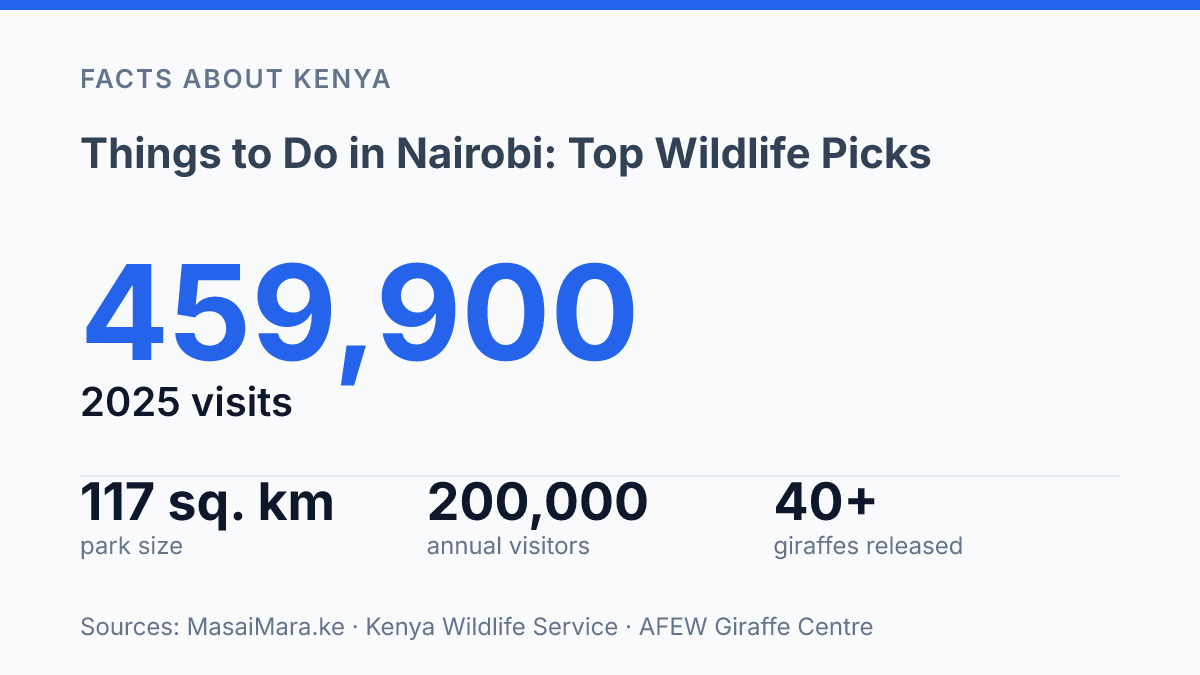
Things to do in Nairobi rarely get stranger than this: you can watch rhinos under a skyline in a 117 sq. km national park, then cross town for an elephant nursery locked to one strict hour.
That contrast is the city’s real advantage. Nairobi National Park sits about 8 km from the CBD. It holds 100 mammal species and more than 400 bird species.
But the easy distances can fool you. The best wildlife day depends less on miles than timing.
The nursery visit at Sheldrick runs at 11:00 AM. The Giraffe Centre gets crowded around midday. Park fees run on a 24-hour window.
Get the order wrong. You spend your day in traffic instead of watching Rothschild’s giraffes lean over a feeding platform. In my honest opinion, Nairobi rewards people who plan with a clock, not a wish list.
Nairobi National Park safari with the city skyline
Lions can appear in the same frame as office towers here. That visual clash is the reason this park beats almost every other first wildlife stop in the city. Opened in 1946 as Kenya’s first national park, it still gives you that strange Nairobi signature: big-game viewing with the skyline sitting right behind the grassland.
Nairobi National Park is close enough to feel almost unreal. It’s only about 7 km from the city center. You don’t need to leave Nairobi or commit to a long road transfer before your first game drive.
That convenience matters if your schedule is tight. It doesn’t make the experience feel small.
According to Kenya Wildlife Service, 2026/current park page, the park covers 117 square kilometers, sits about 8 km from Nairobi CBD, and holds 100 mammal species plus 400 migratory and endemic bird species. On a typical morning drive, visitors most want lions, rhinos, giraffes, and zebras.
You’re not just checking off animals. You’re watching them against a city that never fully disappears.
That access has a catch. The park is easy enough for a half-day visit, but timing decides whether you get clean sightings or a row of vehicles in your photos. Start early if you care about softer light, cooler conditions, and fewer safari vans clustered around the same sighting.
In my view, that tradeoff is what makes it feel so unusual. You get real wildlife without the long escape.
You also feel the pressure of being near a capital city. For travelers comparing Nairobi wildlife stops, this one should come first because it shows the city’s wild edge at its most direct.
Meet Rothschild’s giraffes at the Giraffe Centre
A giraffe can take food from your hand here. The bigger story is that some calves raised through this work later move into protected Kenyan habitats. That shift from close-up encounter to conservation outcome is what makes the Giraffe Centre in Karen feel different from a quick photo stop.
The centre was founded in 1979 by Jock and Betty Leslie-Melville, after their work with the endangered Rothschild’s giraffe began on their property. Visitors meet this subspecies from a raised wooden platform, close enough to see the long eyelashes, dark patches, and careful tongue movements that make the moment feel almost comic.
It’s playful, yes. But the animal in front of you belongs to a group that has needed serious protection.
That contrast gives the visit its weight. You’re laughing as a giraffe leans in for a pellet. The centre exists because numbers fell and habitat became less secure. In my honest opinion, that’s what separates a good tourist stop from a memorable one.
The conservation link is direct. The Giraffe Centre operates through the African Fund for Endangered Wildlife, and AFEW says calves are released into safe parks and conservancies when they are about 2 to 3 years old. It also reports releasing more than 40 giraffes so far, which turns the platform encounter into part of a longer chain of rescue, breeding, education, and return.
Education matters just as much as the feeding platform. AFEW’s programs bring Kenyan schoolchildren into close contact with wildlife, giving conservation a local audience instead of treating it as something designed only for visitors. That’s why this stop belongs near the top of a short Nairobi wildlife list.
It gives you the pleasure of proximity. It doesn’t let you forget the pressure behind it.
Visit baby elephants at the Sheldrick Wildlife Trust
The hour everyone wants at the elephant nursery is also the hour that makes a Nairobi wildlife day hardest to schedule. The Sheldrick Wildlife Trust, founded in 1977 by Daphne Sheldrick, runs its orphan elephant public viewing from 11:00 a.m. to 12:00 p.m. only. Miss that window and you’ve missed the visit, not just a nicer time slot.
During the session, keepers bring the young elephants out for milk bottles, short talks, and mud play when the weather suits it. The moment looks sweet from the rope line. It isn’t staged as a petting stop.
You watch care happen at a distance. That boundary matters.
Visitors come for the tiny trunks and the bottle-feeding photos. The harder story is why these calves are there at all. Many arrive after poaching, drought, injury, human-wildlife conflict, or separation from their herds. In my humble opinion, that contrast is what gives the visit its force.
The trust’s work goes far beyond the nursery. Its teams support anti-poaching patrols, veterinary response, aerial surveillance, and long-term rehabilitation for elephant orphans across Kenya.
Release isn’t quick either. A calf may need years of care before it can rejoin wild-living elephants on its own terms.
Planning has to respect that strict midday rhythm. According to the trust’s current visitor information, the Nairobi Nursery visit must be booked in advance, dates open only within the next 3 months.
The public session runs daily except 25 December. The entry donation is US$20 per adult and US$5 per child under 12, so it’s easy to budget, but not something to leave to chance.
Go for the feeding if that’s what caught your eye. Leave remembering the keepers, the rescue chain. The patience behind every small elephant still learning how to be wild again.
Plan a tight one-day route without rushing
The smartest Nairobi wildlife day is built backward from one fixed hour: 11:00 a.m.. Start with Nairobi National Park as early as your driver and ticketing allow. Then move toward the Giraffe Centre late morning, before reaching the Sheldrick Wildlife Trust nursery viewing on time.
Keep the order simple: safari first, giraffes second, elephants third. That sequence works because the park rewards early movement, the giraffe stop is easier to control.
The elephant visit gives you the least flexibility. If one piece slips, let the giraffe stop absorb the pressure rather than risking the nursery slot.
Karen is the practical anchor for the second half of the day. Pair the Giraffe Centre with Sheldrick from there, instead of zigzagging across the city. AFEW’s current FAQ recommends 1.5 to 2 hours for the giraffe visit, so don’t treat it like a five-minute photo stop.
Traffic is the part of the itinerary that looks harmless on paper and punishes you in real life. Leave early, especially if you want to fit all three wildlife stops into one day.
Nairobi’s delays don’t need to be dramatic to hurt you. A slow junction at the wrong time can eat the buffer you thought you had.
The obvious plan is to pack everything in, but Nairobi rewards people who leave a little breathing room. In my view, Trying to do too much in one day is the fastest way to ruin the best parts. A rushed giraffe visit feels transactional. A late arrival for elephants feels worse because the window is so narrow.
If you want a clean day, resist adding extra stops between these three. Have lunch after the elephant visit, not before it. That small choice keeps the morning focused and lets the day feel full without turning it into a race.
Why timing matters more than distance here
Your best move is to build the day around the appointment you can’t bend: 11:00 AM at Sheldrick Wildlife Trust. Everything else should orbit that slot.
Book first. Then place the park at the edge of the day, when animals and light work in your favor.
Use the Giraffe Centre as the flexible stop, not the anchor. Its appeal is real, but crowds change the mood fast.
The odd truth is that Nairobi’s wildlife circuit feels easy because the map looks compact. It isn’t.
A park fee lasts 24 hours, traffic can eat a perfect plan, and conservation visits deserve more than a rushed photo. In my humble opinion, the people who enjoy this day most aren’t lucky. They respect the clock.
Frequently Asked Questions
Q: Can you see wildlife without leaving Nairobi?
A: Yes. Nairobi National Park puts wild animals right next to the city. That contrast is the whole appeal. You can see lions with the skyline behind them, which is a strange but real Nairobi moment. In my view, that’s the experience people remember most.
Q: Is Nairobi National Park worth visiting for a short trip?
A: Absolutely. If you only have a few hours, it gives you the biggest wildlife payoff for the least travel time. The surprise is how close the park feels to the city. The animal sightings still feel properly wild.
Q: What can you do at the Giraffe Centre?
A: You can hand-feed Rothschild’s giraffes there, including an endangered herd that makes the visit feel personal. It’s a simple stop, but that’s the point… you’re close enough to actually connect with the animals. In my honest opinion, it beats a rushed photo stop every time.
Q: Can you see baby elephants in Nairobi?
A: Yes, at the Sheldrick Wildlife Trust. Visitors go to see rescued baby elephants up close. That part is a lot more moving than people expect. The visit is short. It leaves a strong impression.
Q: What are the best wildlife things to do in Nairobi for first-time visitors?
A: Start with Nairobi National Park, the Giraffe Centre. The Sheldrick Wildlife Trust. Those three stops give you the clearest picture of the city’s wildlife side without wasting time. If you want the classic shortlist for Things to do in Nairobi, that’s the one.