
Most cities keep their lions in logos. Fun and interesting facts about Nairobi start with real ones about 10 km from the central business district. The city began as a Uganda Railway depot in 1899, then replaced Mombasa as Kenya’s capital just eight years later.
That origin story sounds modest. It wasn’t.
Today, Nairobi produces 27.5% of Kenya’s gross value added, far ahead of the next counties. But the stranger fact sits at its edge: Nairobi National Park covers 117 sq. km and holds rhinos, lions, about 100 mammal species, and more than 400 bird species. Few capitals can make that contrast feel normal.
The best details aren’t only safari details. They sit in railway history, UN compounds, revived museums, startup rankings, and places locals still name without checking a guidebook. In my honest opinion, that mix is what makes Nairobi hard to reduce to a postcard.
How Nairobi grew from a rail stop to Kenya’s capital
Nairobi needed only eight years to jump from railway depot to capital, a rise that still explains the city’s outsized pull today. According to the Nairobi City County Integrated Development Plan 2023–2027, Nairobi was founded in 1899 as a rail depot on the Uganda–Kenya Railway and replaced Mombasa as the capital of Kenya in 1907.
That origin matters. The city wasn’t planned first as a ceremonial seat of power. It was built to serve movement: tracks, workers, supplies, repair yards.
The hard logic of distance. But that practical start gave Nairobi something prestige projects can’t fake. It sat inland, on a route that pulled people and goods through the highlands, so administration followed the railway rather than the other way around.
The name adds another layer to the story. Nairobi is linked to the Maasai phrase Enkare Nairobi, meaning “cool water,” a reminder that the place had meaning before the rail depot fixed it on colonial maps. In my view, that detail matters because it keeps the city from being reduced to a railway footnote. The tracks explain its acceleration, but not its whole identity.
By 1963, when Kenya became independent, Nairobi carried the political weight of the new nation. It was no longer just an inland administrative choice. It became the capital of an independent Kenya, with government, diplomacy, commerce, and migration all pressing into the same urban space.
That contrast is the best way to read Nairobi’s early rise. It began as infrastructure, not pageantry.
Yet the same rail logic that made it useful also made it powerful. Among the fun and interesting facts about Nairobi, this one has real bite: the city became central almost by being practical first.
The wildlife story that makes Nairobi hard to copy
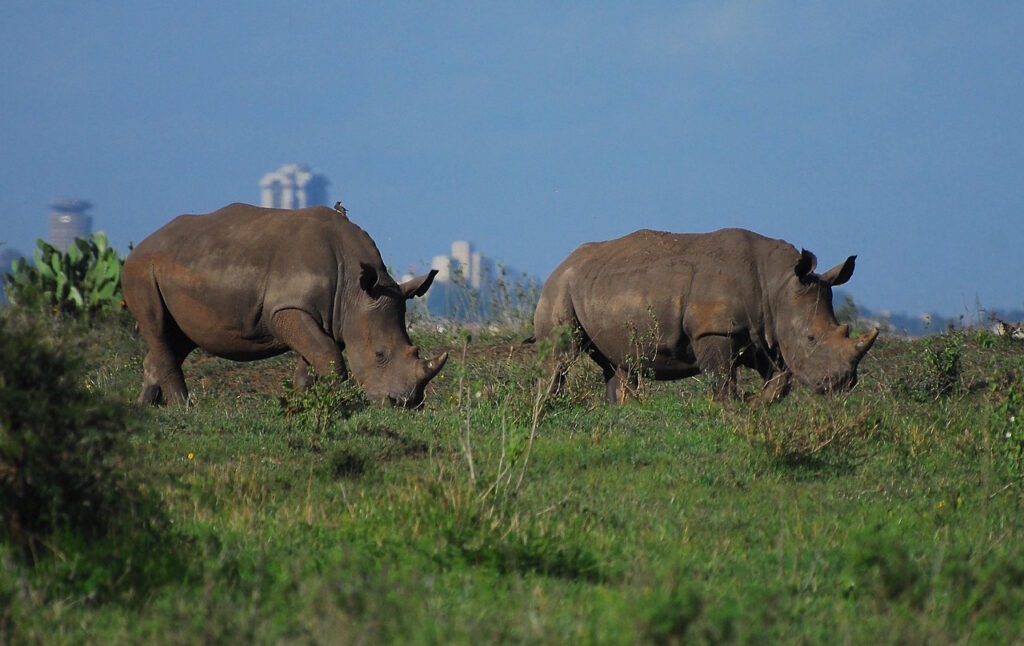
Lions live close enough to Nairobi’s office towers that the city’s skyline can appear behind them in the same photograph. That’s not a marketing trick. Nairobi National Park sits about 10 kilometers from the central business district, according to Kenya Wildlife Service, close enough to make the city feel oddly split between traffic, glass buildings, and open grassland.
The protected area covers 117 square kilometers, a small space by East African conservation standards. But its size is part of the point.
You’re not looking at wilderness far from urban life. You’re looking at wildlife holding ground beside one of Africa’s major capitals.
Rhinos, lions, giraffes, buffalo, zebras, and antelopes all live there, with Kenya Wildlife Service listing about 100 mammal species and more than 400 bird species. That mix gives Nairobi a fact few cities can match: large wild animals exist near the daily rhythm of a national capital, not in a distant reserve reached after a long road trip.
A capital city with lions on its edge sounds like a gimmick… but the pressure around the park is real. Roads, housing, industry, and fencing all shape how animals move.
Conservation here isn’t a postcard. It’s a negotiation between land values and living ecosystems.
Rhinos show that tension clearly. On February 2, 2024, Kenya Wildlife Service moved three eastern black rhinos from the park as part of a wider 21-rhino translocation to Loisaba Conservancy.
That detail matters because it shows the park isn’t just a visitor attraction. It also functions as part of Kenya’s active conservation network.
In my honest opinion, this is the wildlife fact that makes Nairobi hardest to copy. Plenty of cities have parks.
Plenty have zoos. Very few have a protected national park where wild lions and rhinos live beside the capital’s daily commute, and fewer still have to defend that space every year against the city growing around it.
Landmarks, museums, and places locals actually mention
The easiest landmark to spot from downtown is also one of the best places to see how uneven, green, dense, and vertical Nairobi really is. The Kenyatta International Convention Centre opened in 1973, and its 28-floor tower still cuts a clear shape against the central business district. Take the lift up to the rooftop viewing deck and the city stops feeling abstract. In my humble opinion, the rooftop is the simplest way to understand Nairobi’s scale.
That view comes with a tradeoff. KICC is famous because it’s easy to find, easy to photograph, and close to the offices, hotels, and government buildings that shape many visitors’ first impression.
But the places locals bring up in conversation aren’t always the postcard stops. They’re the gardens, archives, old cinemas, food streets, churches, libraries, and neighborhood corners tied to daily memory.
The National Museum of Kenya gives the city a different kind of weight. It’s a major stop for history, culture, natural heritage, and art, not just a rainy-day museum box to tick off.
You go there to see how Kenya’s story sits inside Nairobi rather than around it. That matters, since the capital can look too corporate from the outside.
Smaller cultural stops add the texture. The Kenya National Archives on Moi Avenue pulls people into documents, photographs, and public memory right in the middle of town. Uhuru Gardens carries national symbolism on a larger scale, with 22 galleries and free entry listed by Uhuru Gardens National Monument and Museum in 2024.
These aren’t hidden in the romantic sense. They’re just skipped by travelers who move too quickly.
That’s the Nairobi pattern. The best-known places are often the simplest to reach. The places residents return to usually ask for a slower pace.
If you only chase the big landmarks, you’ll get a clean version of the city. Stay a little longer. The institutions people actually use start to say more than the skyline does.
Why Nairobi feels different from other African capitals
One city county produced 27.5% of Kenya’s total gross value added in 2023, according to the Kenya National Bureau of Statistics. That single figure explains more than any skyline photo can. In my view, Nairobi feels different because it doesn’t just contain national power. It concentrates opportunity so tightly that the rest of the country can feel its pull.
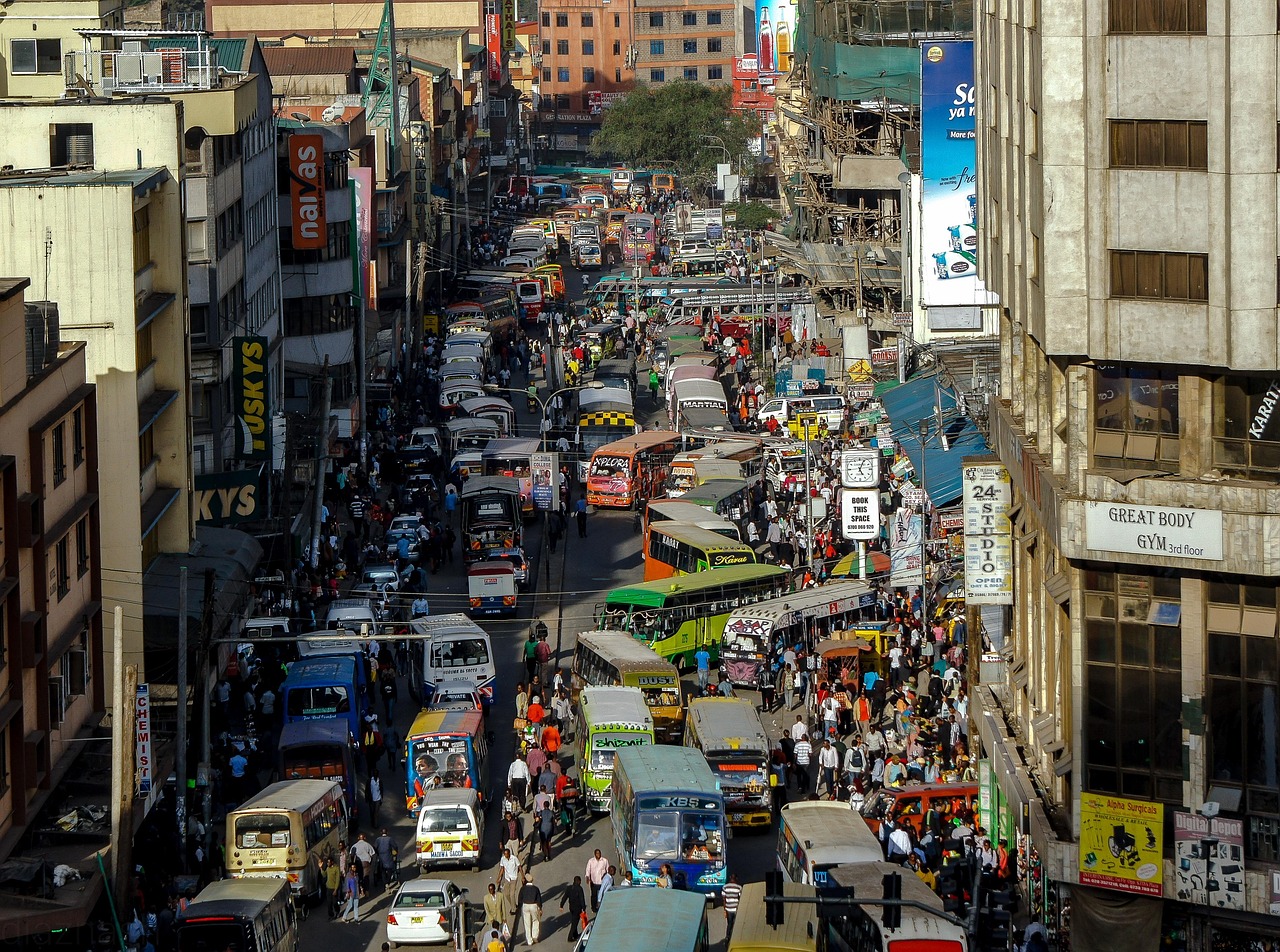
The 2019 Kenya Population and Housing Census counted 4,397,073 people in Nairobi City County. That’s not huge beside the world’s largest cities. The pressure is intense because jobs, schools, embassies, banks, media houses, and government offices crowd into the same urban system.
You feel the scale in commutes, rent, queues. The constant churn of people arriving to try their luck.
Gigiri gives Nairobi another layer that most capitals don’t have at this size. The United Nations complex there covers 146 acres and accommodates more than 3,500 staff, according to United Nations procurement data. It anchors major UN agencies including UNEP and UN-Habitat, while companies such as Safaricom, KCB Group, Equity Group Holdings, Microsoft, and Google deepen the city’s regional business pull.
The tech story adds speed to that mix. Nairobi’s Silicon Savannah nickname isn’t just civic branding; Startup Genome’s 2024 report ranked the city as the top sub-Saharan African startup ecosystem for performance, based on value created through funding and exits.
Still, the label can hide the harder truth. Founders pitch to investors in co-working spaces, but their staff may still lose hours in traffic or spend a harsh share of income on housing.
That contrast is the sharp takeaway. Nairobi sells motion, ambition, and modern urban confidence better than almost anywhere in the region. But daily life is shaped just as much by congestion, expensive neighborhoods, and visible inequality.
The city’s edge comes from that friction. It’s exciting because it moves fast, and exhausting for the same reason.
Read Nairobi by its tradeoffs, not its postcard
The smarter way to approach Nairobi is to stop treating its contradictions as trivia. They’re the point. A city can move black rhinos out of its park for conservation, host diplomats at Gigiri, and still argue with traffic before breakfast.
If you visit, don’t build the trip around one label. Give yourself a day that moves from wildlife to memory to modern work: park edge, Uhuru Gardens, a neighborhood café, maybe the UN district if access allows. The 146 acres there say as much about Nairobi’s global role as any skyline shot.
By 2024, the city was already being measured in startup performance, heritage footfall, and rhino recovery. In my humble opinion, Nairobi’s real story is not that it contains opposites. It makes them negotiate for space.
Frequently Asked Questions
Q: What is Nairobi best known for?
A: Nairobi is best known as Kenya’s capital and as the only major city where you can see wildlife so close to downtown. That contrast is the point… you get big-city traffic on one side and protected nature on the other. In my view, that mix is what makes the city memorable instead of just busy.
Q: Why do people call Nairobi the Green City in the Sun?
A: The nickname fits because Nairobi has a lot of tree cover and open green space for a capital city. It sounds gentle. The city itself moves fast. That clash gives the name its charm.
Q: Can you see animals in Nairobi without leaving the city?
A: Yes. That surprises a lot of first-time visitors. Nairobi National Park sits right next to the city. You can spot wildlife without a long road trip. That’s rare for a capital. It changes how people think about the city.
Q: Is Nairobi one of Africa’s biggest cities?
A: Yes, Nairobi is one of East Africa’s major urban centers and a serious economic hub. 1899 is the key date here, since that’s when it was founded as a railway depot. 4.4 million people live in the metro area. That scale explains the city’s pull.
Q: What makes Nairobi a popular place to visit?
A: Nairobi gives you a rare mix of culture, food, history, and nature in one trip. That balance matters because you don’t have to choose between a city break and an outdoor one. If you want variety fast, Nairobi delivers.